
Causes, dental links and what to do about it
A bitter taste in mouth can be frustrating, distracting and sometimes worrying. Many patients describe it as a lingering unpleasant flavour that does not go away after brushing. Others say they wake up with a bitter mouth in the morning or notice food tasting strange throughout the day.
At Aesthetique Dental Care, 21 Wharf Street, The Calls, Leeds, LS2 7EQ, we regularly assess patients who mention a bitter taste as part of their dental check-up or emergency visit. In some cases, the cause is straightforward and easily resolved. In others, it may be a sign of underlying dental or medical factors that require careful assessment.
This article explains the most common causes of a bitter taste in mouth, how oral health plays a role, and when professional care is needed.
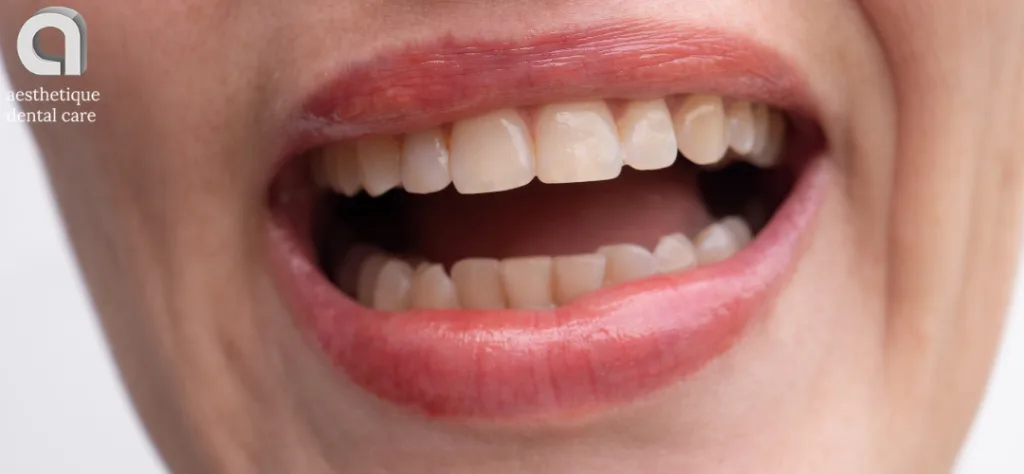
What does a bitter taste in mouth usually mean?
A bitter taste in mouth often signals that bacteria, inflammation or dryness is affecting the oral environment. Taste perception is influenced by:
- Saliva flow
- Gum health
- Tongue coating
- Dental restorations
- Infections
- Systemic health
When the balance inside the mouth changes, a bitter mouth can develop.
While many cases are mild, persistent symptoms should never be ignored.
Dental causes of bitter mouth
1. Gum inflammation and plaque build-up
One of the most common causes of a bitter taste in mouth is plaque accumulation along the gumline.
Bacteria produce sulphur compounds that can create:
- Bad breath
- Metallic or bitter taste
- Ongoing unpleasant flavour
Early gum disease (gingivitis) may not be painful but can cause a persistent bitter mouth.
Professional cleaning with a dental hygienist in Leeds removes plaque and calculus that cannot be managed at home. In many cases, this alone resolves the taste issue.
2. Periodontal disease
If gum disease progresses, deeper pockets form around the teeth. These areas trap bacteria and can lead to:
- Chronic bitter taste in mouth
- Bleeding gums
- Persistent bad breath
During routine routine care appointments, we carefully assess gum health to identify problems early.
3. Dental infection or abscess
A dental abscess can cause pus to drain into the mouth, resulting in a very noticeable bitter mouth sensation.
Symptoms may include:
- Localised pain
- Swelling
- Fever
- Difficulty biting
If infection is suspected, urgent evaluation through an emergency dentist in Leeds is important to prevent complications.
4. Failing restorations
Old fillings, crowns or bridges that are breaking down may trap bacteria. This can lead to a bitter taste in mouth even without obvious pain.
Careful examination under magnification often reveals small gaps or cracks that are not visible to patients.
Dry mouth and altered taste
Saliva is essential for neutralising acids and washing away bacteria. When saliva flow is reduced, a bitter mouth is more likely.
Dry mouth may be caused by:
- Stress
- Medication
- Dehydration
- Hormonal changes
Reduced saliva increases bacterial growth, which contributes to a bitter taste in mouth.
Managing dry mouth involves hydration, saliva stimulation and professional assessment.
Acid reflux and bitter mouth
Gastro-oesophageal reflux can allow stomach acid to reach the throat and mouth. This commonly causes:
- Bitter or sour taste
- Burning sensation
- Enamel erosion
Dentists are often the first to detect signs of acid erosion on teeth. Identifying reflux early protects long-term dental health.
Medication and systemic factors
Certain medications can alter taste perception. Antibiotics, blood pressure medication and some antidepressants are common examples.
If a bitter taste in mouth develops shortly after starting a new medication, it is worth discussing this with your GP.
Dentists assess whether oral factors are contributing before considering systemic causes.
When a bitter taste becomes an emergency
You should seek urgent care if a bitter mouth is accompanied by:
- Severe swelling
- Facial asymmetry
- Difficulty swallowing
- Fever
- Spreading pain
These symptoms may indicate infection requiring immediate attention. An assessment through our emergency dental service ensures safe and prompt management.
How we diagnose bitter taste in mouth
At Aesthetique Dental Care, diagnosis is systematic and thorough. During a routine appointment, we:
- Review medical history
- Assess gum health
- Examine restorations
- Evaluate saliva flow
- Check for infection
This structured approach ensures we identify the root cause rather than treating symptoms alone.
With over 20 years of clinical experience, Dr Ferakh Hamid (GDC No. 79184) leads our team with a focus on accurate diagnosis and predictable outcomes.
How to improve a bitter mouth at home
While professional care is essential in persistent cases, these measures may help:
- Drink water regularly
- Clean your tongue gently
- Maintain twice-daily brushing
- Floss daily
- Avoid alcohol-based mouthwash
These steps reduce bacterial load and support saliva flow.
However, if a bitter taste in mouth continues beyond two weeks, professional assessment is advisable.
Sedation for anxious patients
Some patients delay dental care because they feel nervous. Anxiety can worsen dry mouth and heighten awareness of taste changes.
Our sedation services provide a calm, comfortable option for patients who feel anxious about treatment. Sedation allows necessary care to be completed without added stress.
The importance of routine dental care
Many cases of bitter mouth develop gradually. Regular dental visits allow us to detect:
- Early gum inflammation
- Failing restorations
- Subtle infection
- Enamel erosion
Routine appointments under routine dental care help prevent minor issues from becoming complex.
Prevention is always more predictable than emergency treatment.
Why choose Aesthetique Dental Care in Leeds
Our practice combines:
- Experienced clinical leadership
- Modern diagnostic tools
- Calm and supportive care
- Emergency access when needed
- Preventive focus
We treat every symptom as a clinical sign, not just a nuisance. A bitter taste in mouth deserves proper assessment, not guesswork.
More about our services can be found at Aesthetique Dental Care.
Final thoughts
A persistent bitter taste in mouth or ongoing bitter mouth sensation is rarely random. In many cases, there is a clear dental explanation that can be addressed with appropriate care.
At Aesthetique Dental Care in Leeds, we focus on identifying the underlying cause and providing calm, evidence-based treatment. Whether the issue is gum inflammation, infection, dryness or restorative concerns, early assessment leads to better outcomes.
If symptoms persist, a structured dental examination offers clarity and reassurance.
Disclaimer
This article is for general guidance only and does not replace a professional dental examination. If you experience severe swelling, fever or difficulty swallowing, seek urgent dental care or contact NHS 111 for advice.
What patients usually ask
Is a bitter taste in mouth serious?
Often it is caused by minor dental issues, but persistent symptoms should be examined to rule out infection or gum disease.
Why do I wake up with a bitter mouth?
Dry mouth overnight, reflux or gum inflammation are common causes.
Can gum disease cause a bitter taste in mouth?
Yes. Bacteria and bleeding gums frequently produce an unpleasant taste.
How long should a bitter taste last?
If it lasts more than two weeks or worsens, professional assessment is recommended.
Can anxiety cause a bitter mouth?
Anxiety can reduce saliva and increase sensitivity to taste changes.